
Overview
From the outset, the Migraine Art collection was conceived not as an archive to be locked away but as a living exhibition, meant to educate both the medical profession and the general public about migraine’s profound impact. Selected works from the growing collection traveled to medical centers, galleries, and cultural institutions across three continents, allowing thousands of people to witness the visual and emotional testimony of migraine sufferers.
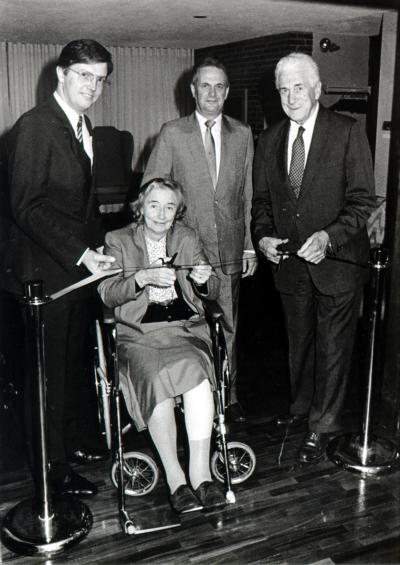
The first exhibition opened on July 1, 1981, at the City of London Migraine Clinic, with Dame Vera Lynn in attendance. Following the prize ceremony, Postgraduate Medical Centers throughout the country mounted displays of Migraine Art, bringing these works before physicians and students. In 1987, the Headache Research Foundation at Boston’s Faulkner Hospital mounted a major exhibition titled “The Art of Migraine,” marking the beginning of sustained transatlantic engagement with the collection.
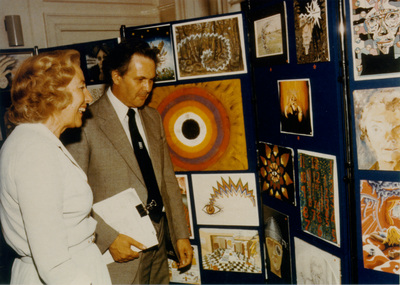
The most significant early exhibition outside the UK came in 1991, when a selection of 90 Migraine Art pictures was shown at the Exploratorium in San Francisco under the title “Mosaic Vision.” This exhibition proved transformative. Oliver Sacks, the renowned neurologist and author of the seminal book “Migraine,” visited the exhibition and subsequently traveled to Derek Robinson’s office in Bracknell to view the complete collection. The encounter profoundly influenced Sacks’ thinking and led him to feature thirteen images from the Migraine Art collection in the 1992 revised edition of his monograph, introducing migraine art to audiences worldwide.
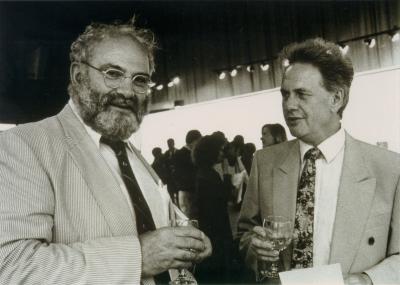
The exhibitions served a critical function in the community of migraine sufferers themselves. Visitors repeatedly expressed how seeing visual representations of others’ migraine experiences provided profound relief—a sense that they were not alone, that their symptoms were shared and understood. One visitor to the San Francisco exhibition wrote: “I was absolutely stunned to see these paintings of what the world looked like when their aural disturbances were happening − it was just what I had been trying to describe! We are in this together.”
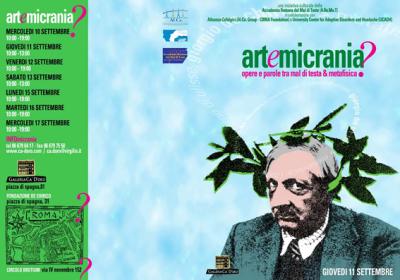
Throughout the 1990s and 2000s, exhibitions spread internationally. Germany mounted its first Migraine Art exhibition in 1997 at the Department of Neuropediatry in Oberhausen. In 2004, a memorial exhibition dedicated to Derek Robinson was organized in Skien, Norway, accompanied by a symposium featuring leading researchers. In 2003, the exhibition “ARTeMICRANIA: Migraine Art: Works and Words Between Headache and Metaphysics?” opened in Rome, featuring works from the collection alongside a remarkable collection of 18 oil paintings and four calligraphies by Giorgio de Chirico. Other exhibitions followed in Salt Lake City, various venues across North America and Europe, and digital galleries online.
These exhibitions transformed Migraine Art from a medical phenomenon into a cultural one. They demonstrated that migraine sufferers possessed artistic agency, that their expressions deserved public attention, and that art could communicate aspects of illness that clinical language alone could not reach.