

Overview
From the earliest competitions onward, migraine art reached audiences through diverse media, extending far beyond the gallery walls into medical journals, popular publications, educational materials, and scholarly monographs. This dissemination transformed the Migraine Art concept from a regional initiative into an international phenomenon that influenced how researchers, clinicians, and sufferers alike understand migraine’s phenomenology.
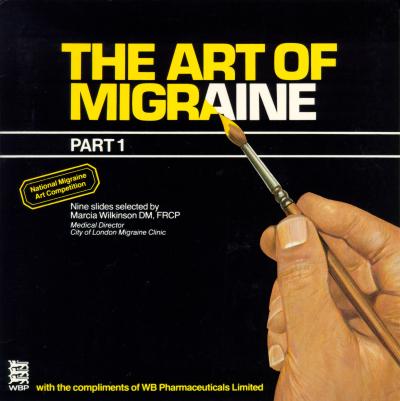
In 1984, WB Pharmaceuticals (a sister company of Boehringer Ingelheim) produced two slide folders titled “The Art of Migraine,” each containing nine images selected from the competition submissions. These folders served as promotional and educational tools, bringing migraine art into medical offices and conferences. That same year, a film titled “The Art of Migraine” won the Silver Award in the British Medical Association film competition, further cementing the concept’s legitimacy in medical circles.
The first scientific publication analyzing migraine art appeared in 1985, when Marcia Wilkinson and Derek Robinson published their analysis of 207 competition entries in the journal Cephalalgia. This seminal paper provided epidemiological and clinical data demonstrating the diversity and medical significance of the artworks, establishing migraine art as a subject worthy of peer-reviewed research.
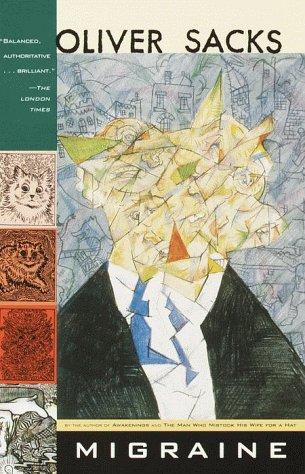
Oliver Sacks’ influence proved transformative. In 1992, Sacks published thirteen images from the Migraine Art collection in the revised edition of his landmark monograph “Migraine,” accompanied by his own phenomenological analysis. His dedication of a copy to Derek Robinson—“For Derek Robinson - whose curatorship of the Migraine Art collection, and courtesy, have made this new, all-colour edition of Migraine possible!”—acknowledged Robinson’s foundational role. Sacks’ book became a major conduit through which Migraine Art reached medical professionals, patients, and general readers, promoting the concept in both academic and popular domains.
Beginning in 1998, Klaus Podoll and Derek Robinson undertook an intensive collaborative research program examining the collection’s contents. Their work generated numerous peer-reviewed publications across medical journals, art history publications, and specialized periodicals. In 2001, they published “Migräne und spirituelle Erfahrung” (Migraine and Spiritual Experience), exploring connections between migraine aura and mystical vision. This scholarly attention culminated in their landmark monograph “Migraine Art - The Migraine Experience From Within,” published by North Atlantic Books in 2009. The book, featuring more than 300 color illustrations, established itself immediately as an essential reference, consulted equally by neurologists, art therapists, medical historians, and sufferers seeking to understand their own experiences.

In 2003, Ubaldo Nicola and Klaus Podoll co-authored “L’aura di Giorgio de Chirico: Arte emicranica e pittura metafisica” (The Aura of Giorgio de Chirico: Migraine Art and Metaphysical Painting), examining the relationship between migraine and modernist art. In 2008, Betsy Baxter Blondin published “Migraine Expressions: A Creative Journey through Life with Migraine,” integrating migraine art with personal narrative and poetry.
Migraine Art pictures have illustrated countless articles in medical journals, lay press, and textbooks. The Italian interdisciplinary journal Confinia Cephalalgica introduced a section on Migraine Art to its Editorial Board in 2002. In 2006, the journal Functional Neurology established a section on neuroesthetics. Medical journals, educational materials, and university textbooks in decorative art and cultural anthropology have reproduced selected works, documenting the broad interdisciplinary recognition of Migraine Art’s significance.