
Overview
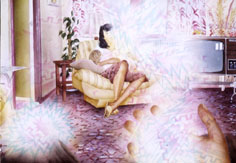
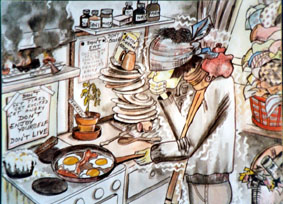
The first major validation of Derek Robinson’s concept came through a series of national competitions that brought migraine art from the consulting room to the public stage. In 1979, Peter Wilson MBE, founder of the British Migraine Association (later renamed the Migraine Action Association), approached Robinson seeking ideas for a publicity campaign. Robinson’s response—“If one person could paint a migraine, then maybe there were others out there”—catalyzed one of the most successful art initiatives in medical history.
The first Migraine Art Competition launched in 1980 under joint sponsorship by the British Migraine Association and Boehringer Ingelheim Limited. The response exceeded all expectations, with over 300 entries from adults, children, schools, and colleges across the United Kingdom and abroad. The competition’s call invited all self-reported migraine sufferers to submit work that captured three themes:
- Their own impressions of any form of visual disturbance heralding a classical migraine attack
- The pain associated with a migraine attack
- The effect migraine had on their lives
Between 1980 and 1987, four successive Migraine Art Competitions generated approximately 900 submissions from not only the UK, but also from Germany, Spain, Switzerland, Sweden, South Africa, Hong Kong, and New Zealand. Some participants submitted multiple entries, creating a rich and diverse archive. From these competitions, 562 pieces remain in the permanent Migraine Art collection, carefully managed by Derek Robinson until his death on February 22, 2001. The collection copyright is held jointly by the British Migraine Association (now Migraine Action Association) and Boehringer Ingelheim, with works available for scientific research, exhibitions, and publications.
Beyond the UK competitions, the success of Robinson’s concept inspired a wave of international initiatives. The National Headache Foundation in the United States organized four “Migraine Masterpieces” competitions (1988–1989, 1997–1998, 2001, and 2003), each exploring different thematic dimensions: the severity of migraine pain, the benefits of prevention, images of migraine, and the sufferer’s world. These contests attracted hundreds of entries and sparked research on the relationship between artmaking and pain, demonstrating that the creative process held clinical significance beyond mere expression.
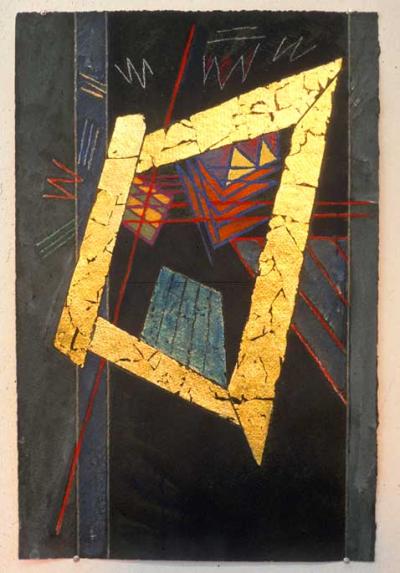
In 1989, the Headache Research Foundation and Sandoz Pharmaceuticals (now part of Novartis) launched a “headache-art” competition in New England, producing over 200 entries that formed the basis of the touring exhibition “Through the Looking Glass” at the Museum of Fine Arts in Boston. The same year witnessed a call for international artists suffering from migraine, while in 1992, the Migraine Trust and Glaxo Pharmaceuticals organized the “Migraine Images” competition in the UK. A 2006 Migraine Art competition in India attracted 550 entries, while countless other smaller initiatives emerged across North America, Europe, and beyond.
The competitions served multiple functions simultaneously: they provided a platform for sufferers to gain recognition and validation, generated medically valuable data on symptom presentation, created artwork suitable for public education, and offered researchers an unprecedented visual record of migraine’s phenomenology.