

Overview
The German philosopher Friedrich Nietzsche suffered from chronic migraines beginning in his youth, enduring attacks that shaped both his life and his philosophical outlook. From age 18 onward, migraines became an inseparable companion to his intellectual work, yet he refused to view them as merely pathological. Instead, he integrated the experience into his reflections on creativity, suffering, and human excellence.
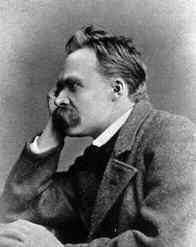
In his autobiographical work Ecce Homo (1888), Nietzsche wrote with stark honesty about the paradox of his condition: “In the midst of the torments brought on by an uninterrupted three-day headache accompanied by the laborious vomiting of phlegm, I possessed a dialectician’s clarity par excellence, and in utter cold blood I then thought out things, for which when I am in better health I am not enough of a climber, not refined, not cold enough.” This description captures a phenomenon many migraine sufferers recognize—that periods of acute pain can paradoxically yield moments of crystalline intellectual clarity.
Nietzsche’s letters document aura-like experiences that preceded his most productive creative periods. These episodes seemed to unlock a heightened capacity for abstract thinking and metaphorical insight. His major works—Thus Spoke Zarathustra, Beyond Good and Evil, The Gay Science—were often composed during or shortly after migraine attacks, as if the neurological turbulence of aura and headache catalyzed philosophical insight.
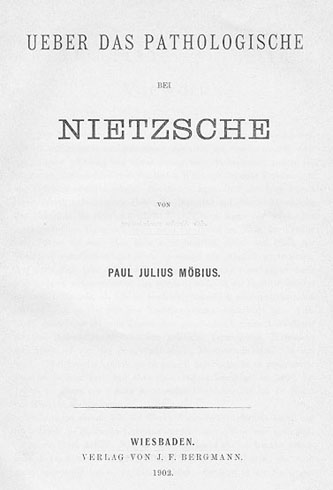
In 1902, psychiatrist Paul Julius Möbius published Über das Pathologische bei Nietzsche (On the Pathological in Nietzsche), which examined the role of migraine and other health conditions in Nietzsche’s thought. Möbius did not view these conditions as undermining Nietzsche’s philosophy but as integral to it—the suffering that informed his penetrating critique of conventional morality and his vision of human potential.
For Nietzsche, migraine was not something to overcome or merely endure. Rather, it was part of what made profound thinking possible: the willingness to experience pain, to descend into discomfort, and to emerge with hard-won clarity. His legacy suggests that some of the most important intellectual and artistic work may arise not despite migraine, but through engagement with its complex phenomenology.