

Overview
Norwegian-American novelist, essayist, and art historian Siri Hustvedt has built a multifaceted literary career exploring the intersections of mind, body, neuroscience, and artistic practice. Her novels—including The Blazing World and Memories of the Future—are known for their intellectual rigor and their investigation of perception, identity, and the slippery boundaries between internal experience and external reality.
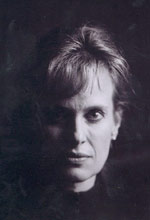
In her essay collections, particularly A Woman Looking at Men Looking at Women, Hustvedt has written with precision and candor about her experience of migraines. Her essays approach migraine not as a simple medical problem but as a complex neurological phenomenon that engages both body and mind, affecting consciousness itself. She explores the phenomenology of migraine—how it feels, how it distorts perception, how it interrupts the flow of everyday life—with the attention to detail that characterizes all her work.
Hustvedt’s intellectual background in neuroscience and art history allows her to situate migraine within broader conversations about the mind, the body, and the nature of subjective experience. She refuses easy reductions of migraine to either purely physical or purely psychological causes, instead tracing the intricate dialogue between neural activity and consciousness, between biological substrate and lived experience. Her writing on migraine exemplifies how a serious thinker can draw on both scientific understanding and artistic sensibility to illuminate what it means to inhabit a body subject to migraine’s recurrent disruptions.
In her essays, Hustvedt engages with the philosophical and scientific literature on pain, perception, and consciousness, while also honoring the particular texture of her own experience. This combination of intellectual breadth and personal honesty makes her work valuable both as literature and as a contribution to our understanding of what migraine actually feels like from the inside—not as a abstraction but as lived, embodied reality.