
Overview
Hildegard of Bingen was a 12th-century Benedictine abbess, composer, and visionary whose illustrated manuscript, the Scivias, documents religious visions that modern neurology recognizes as consistent with migraine aura. Her descriptions of “wheels of light,” falling stars, and brilliant visual phenomena paralleled by contemporary migraine research have made her a landmark case in understanding the intersection of mysticism and neurology.
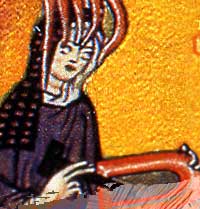
Hildegard’s visions were not merely spiritual experiences but included the characteristic visual disturbances of migraine aura: scintillating patterns, geometric forms, and luminous streaks. Lieut.-Col. R. H. Elliot, writing in 1932, proposed that medieval mystics without medical knowledge would interpret these neurological phenomena as divine revelation. The brilliant flashes, halos, and rotating wheels of light that Hildegard documented in her illuminations closely match the visual patterns reported by modern migraine patients.
Her case remains one of the earliest and most thoroughly documented examples of a historical figure whose artistic and spiritual output may be directly linked to migraine experiences. Oliver Sacks and subsequent neurologists have examined her work as evidence that migraine aura, rather than dismissing the mystical experience, may have enabled it—providing the raw material of vision that a contemplative mind transformed into theology and art.