
Overview
Vincent van Gogh’s visual style—his swirling forms, dynamic brushwork, and vivid colors—has invited comparisons to migraine aura experiences. Viewers familiar with migraine often find his paintings evocative of the distorted, psychedelic haze that accompanies visual migraine aura: the sense that the world has become surreal yet intensely real.
Van Gogh’s extensive correspondence provides rich material for psychological analysis, but clear medical documentation of migraine is sparse. What is evident is his struggle with mental illness, neurological symptoms, and moments of extraordinary creative intensity. Some scholars have suggested that episodes of visual disturbance contributed to his distinctive visual language, though separating migraine effects from his other neurological and psychiatric conditions remains difficult.
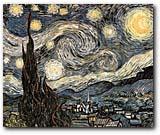
His painting Starry Night (1889) exemplifies the heightened, turbulent vision that contemporary migraine patients often describe: everything vibrant and overwhelming, familiar patterns transformed into something both beautiful and disorienting. Whether this stems from migraine, temporal lobe seizures, or purely imaginative synthesis, van Gogh’s work remains an icon of vision transformed into art.