Visual Loss
Type: Transitory aura symptom — typically develops gradually over 5–20 minutes and resolves within 60 minutes.
What is it?
Visual loss during migraine aura is a temporary reduction or absence of sight in part or all of your visual field. This can range from mild blurring to complete blindness. All visual loss in migraine aura is fully reversible and always resolves.
What it feels like
You may notice difficulty focusing or slight blurriness. Alternatively, a distinct area of your vision may go completely dark or blank—you might see a hole or blind spot within your normal field of view. In rare cases, your entire vision may go black. This is disorienting but never permanent. Vision always returns to normal within 60 minutes.
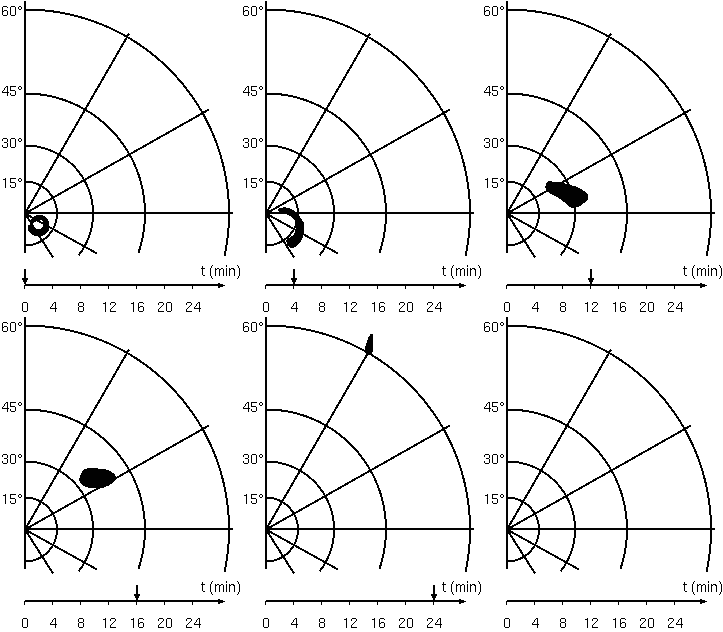 Animated illustration of an expanding positive scotoma — the classic migraine visual aura, showing how the blind spot grows and moves across the visual field over 15–30 minutes.
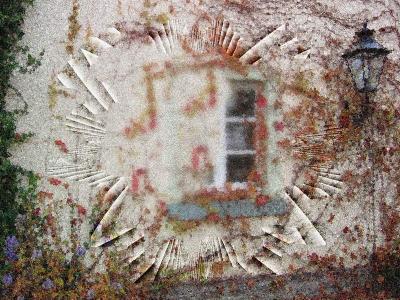 Artwork depicting a scintillating scotoma, 2003.
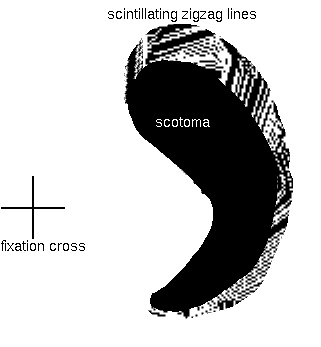 Fortification spectrum, reproduced from a computational model. The zigzag arc expands outward from the centre of vision.
 A C-shaped visual migraine aura completely obscuring part of a landscape — depicting an absolute scotoma.
 Animated visual migraine aura with herringbone pattern and scotoma, reproduced with permission.
How patients describe it
“I’ve had daily migraines for about 2.5 years now. Lately, within the past 3-4 weeks, I’ve noticed that sometimes my right eye will not focus no matter what… Sometimes I’ve noticed that I can’t focus at all, and it makes reading impossible.” — D.T.
“I started to get a blind spot on my left side. I thought it was a migraine blind spot…” — M.W.
“My auras were generally either scotomata or scintillating scotomata… Many of my scotomata scintillated or flickered. I estimated once that they seemed to flicker at a rate of about 15 per second.” — D.P.B.S.
Subtypes
Blurred Vision
Minor visual loss with difficulty focusing on objects. Your vision feels fuzzy or out of focus, but you can still see the general shapes and outlines of things.
Scotoma (Blind Spot)
A distinct area of vision loss—a “blind spot”—appears in your visual field. The spot may be small or large, and it disrupts your normal vision in that area.
Scintillating Scotoma (Flickering Blind Spot)
A blind spot with a shimmering, flickering, or scintillating border. This is the classic visual aura. The spot expands from the center of vision outward over 5 to 20 minutes, then gradually disappears.
Hemianopia (Loss of Half the Visual Field)
One half of your visual field goes dark or blank. You may lose all vision on the right side, left side, top half, or bottom half of your field of view. This is dramatic but always temporary.
Complete Temporary Blindness
In rare cases, your entire vision goes completely dark. You cannot see anything for several minutes to an hour. This is frightening but always resolves fully.
Perceptual Completion Phenomenon
When a scotoma appears, the texture and color of the background continue visually across the blind spot. Your brain “fills in” the missing area with the background, so instead of seeing a hole, you see a seamless continuation of what is behind the scotoma. For example, if you are reading and a scotoma blanks out words, the blank area may appear to be blank paper rather than black void.
Related symptoms
- Scintillating scotoma with geometric patterns
- Visual hallucinations (zig-zags, sparkles)
- Visual illusions and metamorphopsia
- Hemianopia (loss of half the field)
Clinical note
Visual loss that resolves within 20 to 60 minutes is consistent with migraine aura and is benign. However, visual loss that persists, worsens, or is accompanied by other neurological symptoms (weakness, speech difficulty, severe headache) requires urgent medical evaluation to rule out stroke. When in doubt, seek immediate care.
If this is the first time you experience these symptoms, or they feel different from previous episodes, seek medical evaluation to rule out other causes.